Preserving The Oral HistorIES of Combat Veterans
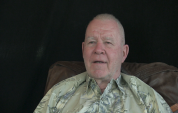
4:29 | It was Igor Sikorsky's dream that the helicopter would be used for medical purposes, like rescue operations. But the war in Vietnam proved it's value as an offensive aircraft. And if you ask Michael Hull, who served two tours there as a pilot, he will tell you that we definitely won that war and the politicians gave it away.
Keywords : Michael Hull pilot helicopter (chopper) Vietnam Thaddeus Lowe politicians
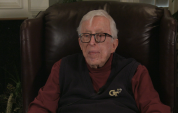
Michael Hull came from a military oriented family. He was eight years old when Pearl Harbor was struck and he corresponded with his uncles who were overseas. He also wanted to fly and, during his years at Georgia Tech, he worked at Lockheed. Once he was commissioned in the Reserve out of ROTC he continued to work for the company.
Michael Hull entered Army flight training in 1957. After primary, advanced and instrument school he received orders for Libya. He had to look it up to see exactly where it was. First, he had to learn helicopters to go with his fixed wing training. The aircraft were difficult to fly back then, with none of the modern enhancements pilots enjoy today.
In Libya, Michael Hull flew a variety of aircraft, both helicopters and fixed wing. He was part of an aviation unit supporting the Army Map Service, who were mapping the Sahara Desert. He was able to bring his family to Tripoli and it was a great assignment. His logged flying hours really took off.
They made him the S2 in a Combat Engineer Battalion but Michael Hull put in for company commander and he got it. There was no flying there for the experienced pilot but he soon transferred to the Army Aviation branch and, when he arrived at the 3rd Transportation Company, his company commander asked him, how do you think you're going to like Vietnam? It was 1962 and he had no idea where Vietnam was.
The war in Vietnam didn't begin with LBJ. In 1961 the first Army helicopter unit arrived and, the following year, Michael Hull arrived as a replacement pilot. He flew combat assaults and resupply missions, mostly supporting Vietnamese troops.
There were no problems for Michael Hull when he returned from his first tour in Vietnam, for which he credits his Christian faith. His next assignment was with the Army aviation laboratory at Fort Eustis. They were working on new concepts for helicopters.
During his second tour in Vietnam, Michael Hull commanded an Army aviation transportation company. Their main job was to recover wrecked aircraft for repair. He took a liking to one of his door gunners who, despite being a high school dropout, was eager to learn to fly helicopters.
He was in it for a career. After two tours in Vietnam and several other assignments, Army pilot Michael Hull was sent to graduate school where he picked up an MBA. He did research for a while and then, after attending Command and General Staff College, went to Canada to work on standardization of aviation hardware and systems.
Michael Hull wanted to wait for his son to graduate high school in Canada so he extended his assignment there despite being told it would sink his next promotion. Turned out it did not so he continued his career as a full Colonel. A major highlight was his time at the Pentagon where he helped shepherd the Apache and Blackhawk programs through the budgeting process.