Preserving The Oral HistorIES of Combat Veterans
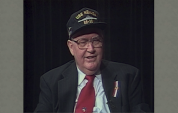
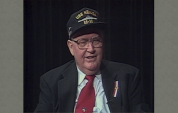
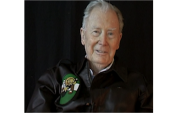
5:18 | The Germans had a big artillery piece and brought it out every day to fire at the Americans who had taken over the French city of Nancy. Alan Kinder was part of a sound ranging artillery unit that was trying to locate the gun using microphones.
Keywords : Alan Kinder sound ranging artillery Nancy France Dwight D. Eisenhower (Ike) Big Bertha Slender Bertha George Patton Stars and Stripes

Alan Kinder grew up in a small coal mining town in the mountains east of Seattle. When he came of age during World War II, the Army found out he had myopia and sent him home but he came back. They fitted him with glasses and sent him along to training.
He remembers hearing President Roosevelt on the radio in the aftermath of Pearl Harbor. Alan Kinder had two more years until he was draft age. During that time, he and his mom and dad were part of the great outpouring of can-do spirit that swept the nation. Everybody pitched in to do what they could.
A year of college got Alan Kinder tagged as a possible operator for a new sound ranging system the Army was using to spot enemy artillery. Microphones picked up the firing and the source location was plotted. The unit didn't do all that well during training but, once they were in Europe, it all fell into place.
The 14th Artillery Regiment was heading to Europe. D-Day had succeeded and Alan Kinder boarded a huge converted ocean liner bound for England. He was still an inexperienced country boy so he wasn't on the hunt for British ladies but he and some pals did discover Stonehenge by accident.
They landed at Utah Beach. It was after midnight and Alan Kinder never really saw the beach until he returned to Normandy decades later. It was a couple of months after D-Day when he made that night landing and the fighting was 30 miles inland at that point. His unit moved rapidly across France until they stopped at the Moselle River.
Alan Kinder was astounded when he got to Luxembourg City because they still had electricity and it was brightly lit. He was apprehensive because the Battle of the Bulge had broken out and the Americans were suddenly on the defensive. After a cozy little Christmas celebration in a tavern with some civilians, his unit moved to support the forces holed up in Bastogne.
Alan Kinder was part of an artillery sound ranging unit which sought out enemy artillery using the sound of the guns firing. They were attached to different units as needed. Eventually, they crossed the Rhine into Germany and occupied an abandoned German air base.
The Germans did not want to surrender to the Russians so the men in Alan Kinder's unit spent a lot of time sending prisoners to the rear. Eventually, with no more war to fight, they were sent to patrol empty country roads where they befriended the German farmers.
It was a lot rougher going home. Alan Kinder had come to Europe on a big ocean liner, very smooth. He went home on a tiny Victory Ship which pitched and rolled all the way home. Once there, and once Japan surrendered, the Army didn't have a lot for him to do.
After the war, Alan Kinder did not keep in touch with the others in his unit. They all scattered and there never was a single reunion. He does have a lot of fine memories of them including a memorable Thanksgiving day during which the men begged not to go and eat turkey and dressing.
During World War II the country was filled with a spirit of togetherness and cooperation that has long ago faded away. Alan Kinder remembers that time and knows how much we could use that same spirit again.