Preserving The Oral HistorIES of Combat Veterans
7:24 | Nam Cao has been back to Vietnam. The former South Vietnamese Navy officer was able to reconnect with his daughter, who had stayed with his parents when he and his wife fled the country. He was able to eventually bring her to the United States.
Keywords : Nam Cao Vietnam Communist propaganda
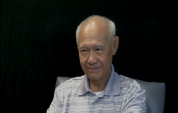
China, Japan and France. Nam Cao's father had been fighting for years in these struggles against outsiders in Vietnam. As the young Cao neared adulthood, it was North against South. He was studying at the polytechnic school in Saigon and had an eye on joining the South Vietnamese Navy.
Nam Cao was still a university student when the Tet Offensive upended the entire country. It was scary. You could be caught in a crossfire between two sides that looked exactly the same. The Communists had worked for years to sow their ideology among the poor in the South and they expected to spark a general uprising.
In 1970, university graduate Nam Cao joined the Republic of Vietnam Navy. It was the era of Vietnamization and the US was trying to get South Vietnam to shoulder the entire load. The first post for the new engineer was Ben Luc, where old ships were overhauled and supply operations run.
He was an engineer who rebuilt boats but Nam Cao still had to work supply runs on the river that supplied ARVN troops. He learned to tell the sound of an AK-47 from the sound of an M-16, which was useful. Sometimes the river would be blocked and an air strike would be called in.
The South Vietnamese Navy sent ships to Subic Bay for overhaul but they also had a facility near Saigon. It was there that they sent Nam Cao, a young engineer. He marveled at the cutaway engines used for training that the engineers from General Motors brought with them.
The VC rockets made it clear. It was time to flee. Along with his wife, South Vietnamese Naval officer Nam Cao and a small group of sailors left the base near Saigon on a Mike boat and made their way downriver toward the sea. Part 1 of 2.
Having made it to the coast, Nam Cao found a better boat that was abandoned there by others fleeing South Vietnam. He had accumulated 60 people as he made his way downriver. The American ships were far offshore, further than he could take the small craft. He decided to make for Thailand. Part 2 of 2.
Nam Cao was at a refugee camp in Thailand along with his wife. His country was no more, having been taken over by forces from the North. As he weighed his options, he decided that trying to get to the United States was his best plan.
Nam Cao and his wife had been accepted for resettlement in the United States. The former South Vietnamese naval officer looked out the window during a stop in Alaska at the snow and bundled up ramp workers. He wondered if he'd made a mistake but there was no stopping now. The next step was finding a sponsor. Part 1 of 2.
Nam Cao was trying to find a sponsor for himself and his family. They had fled Vietnam and were safe at Indiantown Gap but he wanted to get out of there and begin his new life. Fortunately, another refugee family passed their sponsor to him and it was a good match. He headed to Boston. Part 2 of 2.
The resolution of the Vietnam War was sad for everyone on both sides. Nam Cao has built a new life in America for himself and his family and he has gotten over the bitterness of those times. His advice? Be positive and keep an open mind.