Preserving The Oral HistorIES of Combat Veterans
3:47 | The brass were trying out some new things in Vietnam. Dennis Smith describes how they attempted to create instant landing zones with huge bombs. That didn't work so well but there was one area that new technology was making an important mark. That was in night vision.
Keywords : Dennis Smith air control Vietnam anti-war protests peace talks bunker buster landing zone (LZ) bamboo Starlight scope night vision Lockheed YO-3 Quiet Star glider Forward-looking infrared (FLIR) Grumman OV-1 Mohawk
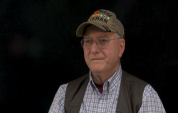
Dennis Smith got his first impressions of war at an early age. As a child, his family lived in France near the Verdun battlefield where he found many relics of the famous battle. When he was older, his father told him about Japanese troops who refused to surrender, a grisly business.
After he was commissioned, the first assignment for Dennis Smith was at a drone squadron in Panama City. His job was air control and he directed the traffic as the drones were used for target practice. But his skill was needed in Vietnam and he took the long flight in 1970. The action at the time was in Cambodia.
Dennis Smith had lived in Okinawa so the heat of Vietnam was a familiar thing. He knew French so that was how he communicated with many of the South Vietnamese officers he worked with. His job was running air control for tanker hookups with fighters, which could be tricky in the volatile weather of the area.
Dennis Smith worked with Forward Air Controllers but his job was different. One night he did a little of it when he was on duty and got a call from a gunship who had spotted some sampans on the Mekong at night which was forbidden. The brass would not give clearance for a strike but then he had a thought. What about the Navy pilots?
After he was appointed Vietnamization Officer and Training Officer, Dennis Smith went to see the commander of the Vietnamese squadron he would be training. The wall was covered with many photographs of men. Who are all these people? The commander abruptly dismissed him. That was when he learned about the Ghost Battalions.
He had to get up to Long Tan. Dennis Smith was waiting for a ride on a helicopter and it was finally his turn. He started to board the ship and an army colonel kicked him off and took it for his own purpose. It promptly crashed on take off and he went to the motor pool where he wound up with a most unusual vehicle.
Dennis Smith flew on Air America a couple of times but he didn't work directly with the CIA, or The Company as it was known. They ran their operations out of Da Nang while he was doing air control for B-52 strikes in Cambodia.
Someone in Dennis Smith's squadron found a Vietnamese orphanage that was run by Buddhist nuns. Conditions were not good there and the men took it on themselves to supply it with baby formula. The money was becoming a drain on their paychecks but one day they captured a nine foot python. They didn't know it yet but that python would become the kids' meal ticket.
Dennis Smith recalls the return from Vietnam as being worse for the guys who were getting out of the service than it was for him. Nobody was getting a good reception but they were getting rudely treated by the military on their way out the door.
It took years but Dennis Smith finally became involved with veterans groups and causes. He noticed that veterans seemed to stick with those from the same war. He remembered something his dad told him that explained this.
Dennis Smith feels sure that the South Vietnamese service members he worked with during the war were executed after it was over. He feels badly about that but he did make a return trip there as a tourist and that had the effect of settling his mind.
After his tour in Vietnam, Dennis Smith continued his Air Force career in Space Track. He served in Germany where an over-the-horizon system covered the entire Soviet Union. He was there during the Yom Kippur War which was nowhere near but which caused the highest level of alert.
It was 1990 and Dennis Smith had put in his retirement papers. That was when he learned about Stop-Loss. The general had one more job for him.