Preserving The Oral HistorIES of Combat Veterans
4:19 | The forward air controller in Vietnam had a unique job. They ran the war in their little corner of it, controlling air strikes, artillery, Naval gunfire and ground movement. Ron Russell knew that he and his fellow FACs were fulfilling that role, though the Air Force never seemed to give them much credit for it.
Keywords : Ronald Ron Russell pilot Forward Air Controller (FAC) Vietnam research and development (R&D) Boeing B-52 Stratofortress Naval gunfire Airborne Command and Control Center (ABCCC) Intelligence (Intel)
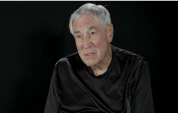
Ron Russell's tour in Vietnam began as a Forward Air Controller based at an old rubber plantation in South Vietnam. Halfway through the tour he was recruited to move to NKP air base in Thailand and serve as a pilot for Special Forces operations and as a FAC flying over the Ho Chi Minh Trail.
As an F-4 pilot, Ron Russell was a perfect candidate to fly the OV-10, a new aircraft designed specifically for counter-insurgency and forward air control. After an eventful tour in Southeast Asia, he went on to a long career in the Air Force and intelligence community.
There was a base camp under VC attack. It was a large force and Forward Air Controller Ron Russell had no air assets available for strikes. He fired his marking rockets, knowing that the enemy would hesitate, fearing an air strike. As that effect wore off, he reached out to the artillery for help.
A long range reconnaissance patrol had been compromised. They had been spotted and at least a company size force was pursuing them. They scrambled into a large bomb crater and it was there that Forward Air Controller Ron Russell directed the fight to save and extract the team.
Ron Russell was heading to Thailand. He had been recruited to help in the clandestine war in Laos which was aimed at interdicting the flow of men and arms on the Ho Chi Minh Trail. He had two duties, supporting Special Forces operations and flying forward air control missions over the Trail.
It was his last mission over Laos. As he was waiting for it to start, Ron Russell spotted another OV-10 flying below him. It was his roommate on another mission and he had spotted some trucks on the Ho Chi Minh Trail. While they were searching for the trucks, Ron found a gun emplacement and turned to mark it for an air strike when a shell struck an engine. He was on fire. Part 1 of 3.
After ejecting from his burning aircraft over Laos, Ron Russell found himself under a tall forest canopy with very little ground vegetation for cover. He hid under a fallen tree and began to radio for help. Then, he heard footsteps. Part 2 of 3.
The fear can be paralyzing. Ron Russell had ejected and parachuted down into a thick jungle in Laos. As he tried to keep calm he remembered the aspirin water he always had on missions and that made him feel a lot better. After his ordeal was over, he assumed his call sign would be retired but it was passed on twice. Isn't that bad luck? Part 3 of 3.
Ultimately, the interdiction campaign on the Ho Chi Minh Trail was a failure. So says Ron Russell and he ought to know because he was a forward air controller directing strikes against targets on the trail. Near the end of his tour he began to have access to laser guided bombs. Enough of those would have meant a different outcome.
After the successful search and rescue of downed pilot Ron Russell, he met another pilot named Woodie Bergeron who had also just been rescued. He was an F-4 back seater and the pilot of his aircraft was not found and was feared dead. It was years later when there was some resolution to the matter.