Preserving The Oral HistorIES of Combat Veterans
6:04 | Through careful management of his leave and R&R time, Joe Chan managed to bring his wife to Thailand, where he was based. They had a nice visit and when he got back to the States, he went back to flying the big transports, C-141s and C-5s. His last assignment was as an Air Attache in Hong Kong, where he traveled in China for four years looking for what an Air Attache looks for.
Keywords : Joe Chan pilot Forward Air Controller (FAC) Vietnam Nakhon Phanom Royal Thai Air Base (NKP) compensatory time off (CTO) Bangkok Thailand Rest and Relaxation (R&R) Dover Air Force Base Lockheed C-141 Starlifter Lockheed C-5 Galaxy Lockheed Marietta GA International Political Military Affairs Officer Washington DC McGuire Air Force Base Air Attache Seoul Korea Hong Kong China
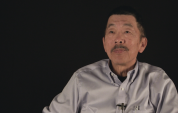
The war was slightly different for Joe Chan, a forward air controller based in Thailand. Most squadrons were spread out over several small air fields around South Vietnam. The 23rd Tactical Air Support Squadron in it's entirety was at the same base and they got to sleep in barracks instead of tents. And their party hooch had a bigger barbecue.
Joe Chan had been flying the big transports but in Vietnam he would fly the brand new OV-10 Bronco, an aircraft specifically designed for counter-insurgency warfare and forward air control. As he trained for this mission at Hurlburt Field, there was a definite atmosphere of party while you can because you are going to war.
Last stop before Vietnam was the Philippines, where Joe Chan had jungle survival training which, improbably, included a visit to a snack bar. When he got in-country and was sweating through mortar and rocket attacks during orientation, he knew exactly which squadron he would pick given the choice.
Interdiction was the mission. Men and materiel were coming down the Ho Chi Minh Trail and forward air controller Joe Chan was there to find it and put air strikes on it. Some of the terrain was thick triple canopy jungle but there was also open space, the result of years of bombing.
There was an extensive program that was hush-hush at the time of placing sensors along the Ho Chi Minh Trail. Some were acoustic and produced audio recordings that could be analyzed for intelligence. FAC pilot Joe Chan heard an amazing recording of a B-52 strike that was picked up by one of these.
Forward air controller Joe Chan would use white phosphorous rockets to mark his targets. He was limited to staying at least 5,000 feet up because of all the ground fire directed at him. He flew over the Ho Chi Minh Trail which was the the most hazardous area for a FAC.
The most challenging missions were search and rescue missions. Then, the forward air controller looked for a friend rather than the enemy on the ground. Joe Chan assisted in several of those which could involve night flying. He preferred flying during daylight once he got a look at the fireworks display at night from all the ant-aircraft guns.
For night operations, the OV-10 would have a navigator in the back seat using a Starlight Scope to search for enemy targets on the ground. FAC pilot Joe Chan describes the limitations of this tactic and the different flares they would use if they actually found something.
After he was retired, Joe Chan, by chance, ran into a buddy from his tour in Vietnam who had been with him on a very special mission. The two of them lucked into a very noisy incident involving a huge ammo dump on the Ho Chi Minh Trail.
He was still at university when Joe Chan learned to fly through Air Force ROTC. After graduation and pilot training he flew C-141 transports for a year. He returned to it years later and, eventually, was commander of a C-141 squadron.
Joe Chan was already flying the big transports but he began training for an entirely different kind of flying. He was going to Vietnam as a Forward Air Controller, a job in which he flew a much smaller aircraft and directed the lethal force of fighters and bombers.
It was safe in Thailand. Forward Air Controller Joe Chan didn't have to worry about mortar or rocket attacks where he was based but there was a trade-off. His area of operations was over Laos and the Ho Chi Minh Trail which meant that he faced very intensive ground fire.
When he was supporting Special Forces on the ground, Forward Air Controller Joe Chan would sometimes have one of their members in his rear seat. Since Joe was Chinese-American, one of them concocted a scheme if they were shot down which made use of his Asian ancestry.
As a Forward Air Controller who flew over the Ho Chi Minh Trail, Joe Chan had access to the audio recordings made by sensors which were dropped along the trail. He remembers one on which could be heard a hapless NVA private dispatched to cut a microphone out of it's perch in a tall tree.
Joe Chan caught more ground fire over his AO in Laos than most pilots did over Vietnam. The enemy were trying to protect the movement along the Ho Chi Minh Trail. During the day it could be hard to see but when he had a night mission he could see the true extent of it.
As a Forward Air Controller, Joe Chan sometimes had pre-planned targets which meant he was looking for a specific place which had attracted interest. He describes his most successful mission in which a vast ammo dump was obliterated.
He was career Air Force so, on his return from Vietnam, Joe Chan didn't really have to face the wrath of anti-war protestors like so many returning veterans. He returned to flying transports which is what he did before they made a FAC out of him.